
How Does an Insurance Collision Repair Claim Work?

Quick Summary
A collision repair claim usually moves through five stages: reporting the accident, getting an initial estimate, having the insurer inspect the damage, authorizing repairs, and receiving the finished vehicle. Knowing this collision repair process helps you anticipate what comes next, since each stage depends on the one before it.
Document the damage with photos from several angles and note the time, weather and any witnesses.
Keep your claim number and your adjuster's direct contact information handy, and follow up on a regular schedule.
Confirm in writing the labor rate and payment arrangement before authorizing repairs at an out-of-network shop.
Your out-of-pocket cost is usually your deductible plus any items your policy does not cover.
Ask each shop for a written warranty, a timeline and how it handles supplement approvals.
Table of Contents
Understanding the Collision Repair Process From Start to Finish
A collision repair claim usually moves through five stages: reporting the accident, getting an initial estimate, having the insurer inspect the damage, authorizing repairs, and receiving the finished vehicle. Knowing this collision repair process helps you anticipate what comes next. Each stage depends on the one before it, so a delay early on often pushes back everything that follows.
Think of the process as a chain of approvals. The shop writes an estimate, your insurer reviews it, and repairs begin only after that approval is in hand. When drivers understand where they are in that chain, they can spot a stalled step quickly and ask the right question to get it moving again.
What to Do Immediately After a Collision
Your first priorities are safety and documentation. Our step-by-step guide to what to do after an accident covers who to call and what to say next. Learn how to check your car for hidden damage after a minor accident.
Do not admit fault at the scene, even casually. Fault is decided later by the insurers and, if necessary, by the courts, and early statements can complicate that process.
Documenting the Accident and Filing Your Insurance Claim
Good documentation makes every later step easier. Photograph damage to both vehicles from several angles, including wide shots that show the position of the cars and close-ups of each dent and scratch.

When you file, you will typically receive a claim number. Keep it handy, along with the name and direct contact information of the insurance adjuster assigned to your case.
Choosing a Collision Repair Shop After an Accident
Shop choice is the decision that most directly shapes repair quality, timeline, and what happens if something goes wrong later. It deserves a structured evaluation because the shop, not the insurer, performs the work and stands behind it.
What to Evaluate Before You Commit
Use the same short checklist for every shop you consider: a checklist of what to compare before committing to a shop.
Warranty, Ask for the workmanship warranty in writing, including its length and what it covers. A written warranty is a stronger signal than a verbal promise.
Communication, Ask how updates are delivered, who your point of contact is, and how supplement approvals are handled. Shops that answer these questions specifically are usually easier to work with during a repair.
Insurer relationships, Ask whether the shop works with your insurer regularly and whether it can bill directly. This affects convenience, not your right to choose.
Your Right to Choose Your Own Repair Shop
In most cases, you have the right to choose the repair shop you want, even if your insurer recommends a different one. Insurers may maintain preferred-shop networks, sometimes called direct repair programs, where participating shops agree to certain rates and processes in exchange for referrals.
If you choose a shop outside your insurer's network, confirm two things before work begins: that the insurer will pay the shop directly or reimburse you, and whether the shop's labor rate exceeds the insurer's approved rate. Any difference may become your responsibility, so get it in writing.
Key Takeaway Your right to choose a shop is generally protected, but the financial mechanics of choosing an out-of-network shop are not automatic. Confirm payment flow and labor-rate differences before authorizing repairs.
Questions to Ask Each Shop
A short interview separates shops that are organized from those that are not:
Do you follow the manufacturer's repair procedures for my vehicle?
How do you handle supplements, and who communicates with the adjuster?
What is your workmanship warranty, and what does it cover?
Can you provide a realistic completion estimate in writing, and how do you notify me if it changes?
Rules Vary by State and Policy
Shop-choice rules and insurer network practices vary by state and by policy. Check your policy documents or call your insurer's claims line to confirm exactly what applies to your situation, and keep a written record of any shop-choice conversation with the adjuster.
How Long Does Collision Repair Take?
Repair time depends on the extent of the damage, parts availability and how quickly the estimate is approved.
Ask the shop for a realistic timeline in writing and request updates if the schedule changes. Clear expectations at the start make delays easier to understand and manage.
The article breaks down the main factors that affect how long a collision repair takes.
Factor | Effect on timeline | Note |
Extent of damage | Determines total repair time | Varies by job |
Parts availability | Can delay completion | Check with the shop |
Estimate approval speed | Affects when repairs begin | Insurer review required |
Supplemental damage | Adds time during repairs | Common cause of delays |
Auto Body Repair Cost Estimates and Understanding Your Coverage
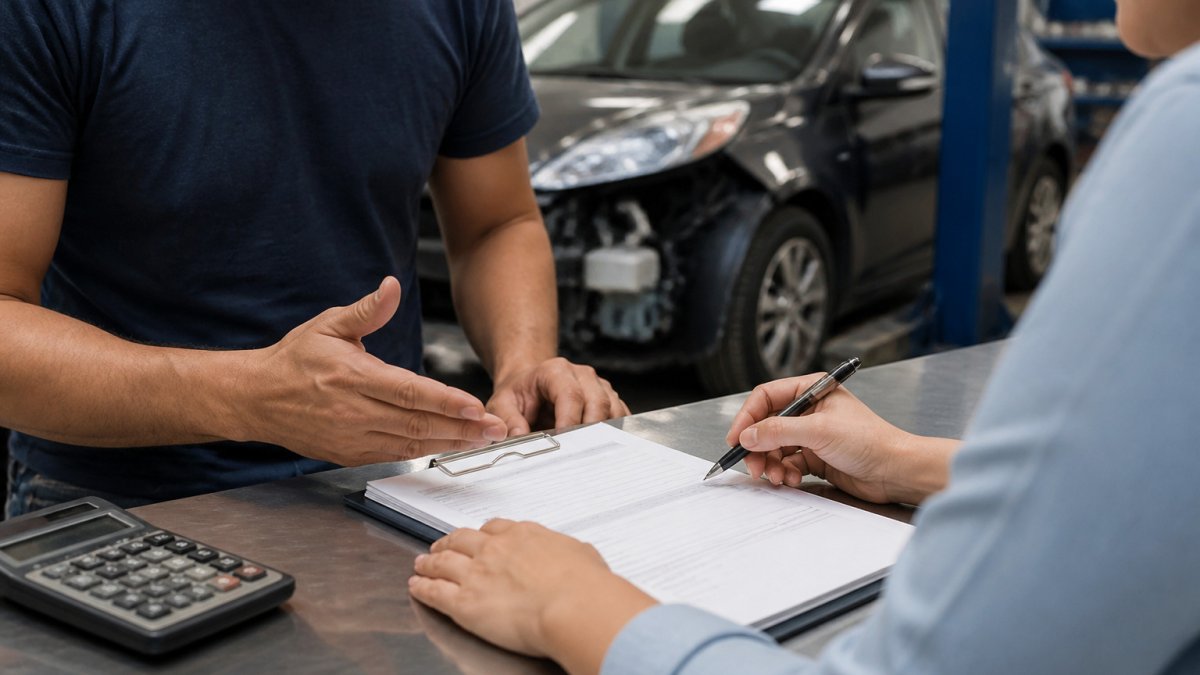
A repair estimate is not a single number, it is a line-by-line document built from labor hours, parts prices, paint and materials, and sometimes sublet work like alignment or calibration. Understanding how each line is priced helps you spot why one shop's estimate differs from another's and why your insurer may adjust the figure before approving it.
How a Collision Repair Estimate Is Built
Most estimates follow a standard format used across the industry. Each line typically shows:
Labor operation and hours, body labor, frame labor, paint labor, and mechanical labor are often priced at different hourly rates.
Parts, new OEM parts, aftermarket parts, recycled parts, or reconditioned parts, each with its own price and warranty implications.
Paint and materials, refinish labor plus a materials charge that covers paint, primer, and consumables.
Labor rates vary by region and by shop type, and insurers sometimes negotiate a prevailing rate. If your shop's rate is higher than the insurer's approved rate, the difference can become an out-of-pocket cost unless the shop and insurer agree otherwise. Ask both parties to confirm the labor rate in writing before repairs begin.
Pro Tip Request the estimate in writing and ask the shop to flag any line the insurer is likely to question. Knowing the likely friction points up front shortens the approval cycle.
Deductibles, Coverage Limits, and What You Actually Pay
Your out-of-pocket cost is usually your deductible plus any items your policy does not cover. Read what a collision repair guarantee covers, what voids it, and questions to ask before you sign. On a collision claim, the deductible applies per claim, not per repair line. If you carry a $500 deductible and the approved repair is $4,200, you typically pay $500 and the insurer pays $3,700, subject to your policy terms.
A few coverage mechanics matter more than drivers expect:
Betterment, If a worn part is replaced with a new one, some insurers attempt to charge you for the added value. This is more common with tires, batteries, and suspension components than with body panels.
Coverage limits, Liability coverage pays for damage you cause to others, while collision coverage pays for your own vehicle. Confirm which coverage is actually responding to your claim.
Diminished value, Even after a perfect repair, a vehicle with a collision history may be worth less. Diminished value is generally handled as a separate claim from the repair itself, and rules vary by state.
When Repair Costs Approach the Vehicle's Value
If the estimated repair cost approaches or exceeds a threshold of the vehicle's actual cash value, the insurer may declare the vehicle a total loss rather than authorize repairs. The threshold is set by state rules and policy terms, and it is not always a simple percentage, some states use a formula that includes salvage value. If you receive a total-loss offer, review the valuation carefully, ask how the actual cash value was calculated, and compare it with local market listings for similar vehicles.
Watch Out A total-loss decision is a separate negotiation from the repair estimate. Do not assume the first valuation is final; ask for the comparable vehicles and the valuation method in writing.
Reviewing Your Estimate Before You Approve Repairs
Before you authorize work, confirm four things with the shop and the adjuster: the labor rate being applied, whether parts are OEM, aftermarket, or recycled, whether paint and materials are included, and which items are still pending insurer approval. Getting those four answers in writing prevents most billing surprises at pickup.
Booking Your Collision Repair at E&A Supreme Auto Body
If you are ready to move forward, E&A Supreme Auto Body can walk you through estimates, insurance coordination and repair scheduling. Our Linden team handles collision repair, auto painting and bumper work for domestic, foreign, luxury and exotic vehicles, and we can help you understand what to expect at each stage. Contact us to schedule service and get your vehicle back on the road.
Frequently Asked Questions
How long does a collision repair usually take?
The timeline depends on the extent of the damage, parts availability and the shop's schedule, so it varies from one repair to the next. Hidden damage found after teardown, called a supplement, can add days. Ask the shop for a written repair timeline when you approve the estimate, and ask them to tell you promptly if the schedule changes.
Do I have the right to choose my own collision repair shop?
Yes. In the United States, you generally have the right to choose any licensed repair facility after an accident, even if your insurer recommends a particular shop. Your insurer may explain the benefits of its preferred network, but it cannot require you to use a specific shop as a condition of paying your claim. Check your policy and your state's rules, and if you feel pressured, you can contact your state insurance department.
What should I avoid saying to my insurance company after an accident?
Stick to the facts: date, time, location, who was involved and what you observed. Avoid guessing about fault, speculating about injuries or saying you are fine before you have been evaluated. Do not agree to a settlement or sign a release without reading it carefully. If you are unsure how to respond to a question, it is reasonable to say you need time to gather information before answering.
Is it worth it to file a collision claim?
It depends on the repair cost compared with your deductible and the effect on your premium. If the estimated repair is only slightly above your deductible, paying out of pocket may be simpler, though a claim can still protect you if the damage turns out to be larger. Compare the net amount you would receive after the deductible against your expected premium increase, and ask your insurer how a claim would affect your rates in your state.
What is the difference between an OEM and aftermarket part in a claim?
OEM parts are made by or for the vehicle manufacturer and match the original specifications. Aftermarket parts are made by other companies and can cost less, but fit and finish may vary. Some policies or state rules allow insurers to specify aftermarket parts, and in some cases you can request OEM parts and pay any price difference. Ask the shop and your adjuster to document which parts are being used and why.
What are the standard stages of the auto insurance claim process?
Most collision claims follow the same general stages: reporting the loss, the insurer assigning an adjuster, inspection or appraisal of the damage, an approved estimate, repair authorization, repair work and any supplements, final inspection, and payment. Each stage may vary by insurer and state, so keep copies of every estimate, invoice and communication, and note the claim number on everything you send.
What happens if my insurer's estimate is lower than the shop's estimate?
This is common, and it is often resolved through discussion. Ask the shop to send its itemized estimate with photos to your adjuster, and request a re-inspection if needed. You can also ask the insurer to explain any line items it removed or reduced. If you still disagree, many states offer an appraisal clause or a consumer complaint process through the state insurance department.
Comments