
7 Ways to Verify Luxury Car Body Shop Expertise

Last Updated: November 4, 2026
Quick Summary
Verifying body shop expertise starts with manufacturer certification, not advertising claims. Confirm the exact credential name and certifying body, check the shop appears in the manufacturer's own locator, verify the expiration date and scope, and confirm the individual technicians assigned to your car hold brand-specific training.
Match the credential to your car, since a manufacturer certification covers your brand's models specifically.
Ask which measuring platform the shop uses and whether it provides pre- and post-repair dimensional reports.
Confirm the shop runs a pre-repair scan and a post-repair scan and documents ADAS calibration results.
Read reviews for repeated patterns, sorting by newest first and checking how the shop replies to criticism.
Request a written estimate listing parts, labor, and paint line by line, plus photos and parts invoices.
Table of Contents
Start With Manufacturer Certifications, Not Advertising Claims
Questions to Ask an Auto Body Shop Before You Hand Over the Keys
Review Body Shop Repair Portfolio Examples for Evidence of Workmanship
Demand a Written Auto Body Repair Estimate and Documentation
Schedule a Repair Consultation With a Shop That Shows Its Credentials
Start With Manufacturer Certifications, Not Advertising Claims
Knowing how to verify luxury car body shop expertise starts with one rule: ignore the ads and check the paperwork. Manufacturer certification is the clearest proof that a shop has met a carmaker's own training and equipment standards. A sign on the wall means nothing until you can confirm what stands behind it.
Which Certifications Actually Matter for Your Vehicle
Match the credential to your car, not to a generic list. A manufacturer-certified collision repair shop holds a program-specific certification from the brand that built your vehicle. That certification covers training, tools, and repair methods for that brand's models. A general industry credential like I-CAR shows baseline training across many vehicles.
Ask a direct question: "Which manufacturer program certifies your techs for my model?" A confident shop answers in seconds.
A Step-by-Step Method to Verify Credentials
Verification is a process, not a vibe. Work through these steps in order and keep notes, because a shop that passes all five is rare and worth the effort.
Get the exact credential name and certifying body. Write down the program name, the certifying organization, and the certificate number if one is listed. "Factory trained" is not a credential; a named program with an issuing body is.
Confirm the shop in the manufacturer's own locator. Most automakers publish a certified collision shop locator on their consumer site. Search by ZIP code and confirm the shop appears under your brand. If the shop is not listed, ask why before you accept any explanation.
Check the expiration date and scope. Certificates carry issue and expiration dates. Confirm the date is current and read the scope line: does the certification cover structural repair, aluminum, paint, or only cosmetic work? A current certificate for the wrong scope is not proof for your repair.
Separate the shop credential from the technician credential. A business can be certified while the individual technician assigned to your car is not. Ask for the names of the technicians who will touch your vehicle and confirm each one holds the brand-specific training. Shop-level and person-level credentials are different documents.
Call the certifying body if anything is unclear. A phone call to the program administrator resolves most doubts in minutes. Ask whether the shop is in good standing and whether any complaints or suspensions are on record.
Why Certifications Lapse and What That Means for You
Certifications are not permanent. Programs require periodic retraining, equipment audits, and facility inspections, and a shop that passed years ago may no longer hold current status. A lapsed certification is not automatically disqualifying, but it means the shop's training and tooling may not reflect the latest repair procedures for your model year.
Verifying a shop's credentials follows a fixed sequence, and each step produces a document or confirmation you can keep.
Step | What to do | What to confirm |
1 | Get the exact credential name and certifying body | Named program and issuing organization |
2 | Confirm the shop in the manufacturer's own locator | Shop appears under your brand by ZIP code |
3 | Check the expiration date and scope | Date is current and scope covers your repair |
4 | Separate shop credential from technician credential | Named techs hold brand-specific training |
5 | Call the certifying body if anything is unclear | Good standing and any complaints on record |
Match Shop Equipment and Training to Your Vehicle's Systems
Equipment and training must fit the car in front of you. A shop set up for steel sedans is not automatically set up for an aluminum-bodied luxury model or an electric vehicle. Collision repair on modern high-end vehicles depends on tools built for specific materials and systems. Instead of asking whether a shop is "equipped for luxury," ask about each system your vehicle actually uses.
Compare Capabilities by Vehicle System
Luxury vehicles are not one category. Walk through the systems below and ask what the shop owns, not what it can rent.
Aluminum bodies and panels. Aluminum repair needs a dedicated, clean bay and separate tools to prevent steel contamination. Ask whether the shop has an aluminum-specific work area and whether technicians hold aluminum repair training for your brand.
Carbon fiber and composite panels. These materials require different bonding, curing, and inspection methods than steel or aluminum. Ask how the shop repairs or replaces composite panels and whether it has documented procedures for your model.
Structural and frame repair. Structural work needs a measuring system to confirm the frame is back to factory spec. Ask which measuring platform the shop uses and whether it can produce a pre- and post-repair dimensional report.
Specialized equipment separates a real luxury shop from a general one. Ask to see the aluminum bay, the measuring bench, and the calibration area. Most shops are proud to show them.
ADAS Calibration and Post-Repair Diagnostic Scans
Advanced driver-assistance systems need recalibration after many repairs. The National Highway Traffic Safety Administration notes that these systems are now common on new vehicles, which makes calibration a routine need rather than a specialty.
Ask concrete questions and expect concrete answers:
Do you run a pre-repair scan to record fault codes before work begins, and a post-repair scan to confirm the systems are clear afterward?
Do you perform ADAS calibration in-house or send it out, and if it is sublet, who does it and how is the result documented?
Which calibration method do you use for my brand: static targets in a controlled space, a dynamic road test, or both?
Will I receive a post-repair inspection report showing the systems passed, including the scan output and calibration results?
A shop without answers here is guessing on your safety features. Calibration is not a checkbox; the documentation is what proves the work was done and the systems passed.
Training That Keeps Pace With New Models
Equipment ages, and so does training. Ask how technicians stay current on new models and systems: manufacturer classes, recertification cycles, and in-shop training on new procedures. A shop that can describe its training calendar and name the last course its technicians completed is managing expertise actively. A shop that answers vaguely is relying on equipment it bought years ago.
Questions to Ask an Auto Body Shop Before You Hand Over the Keys
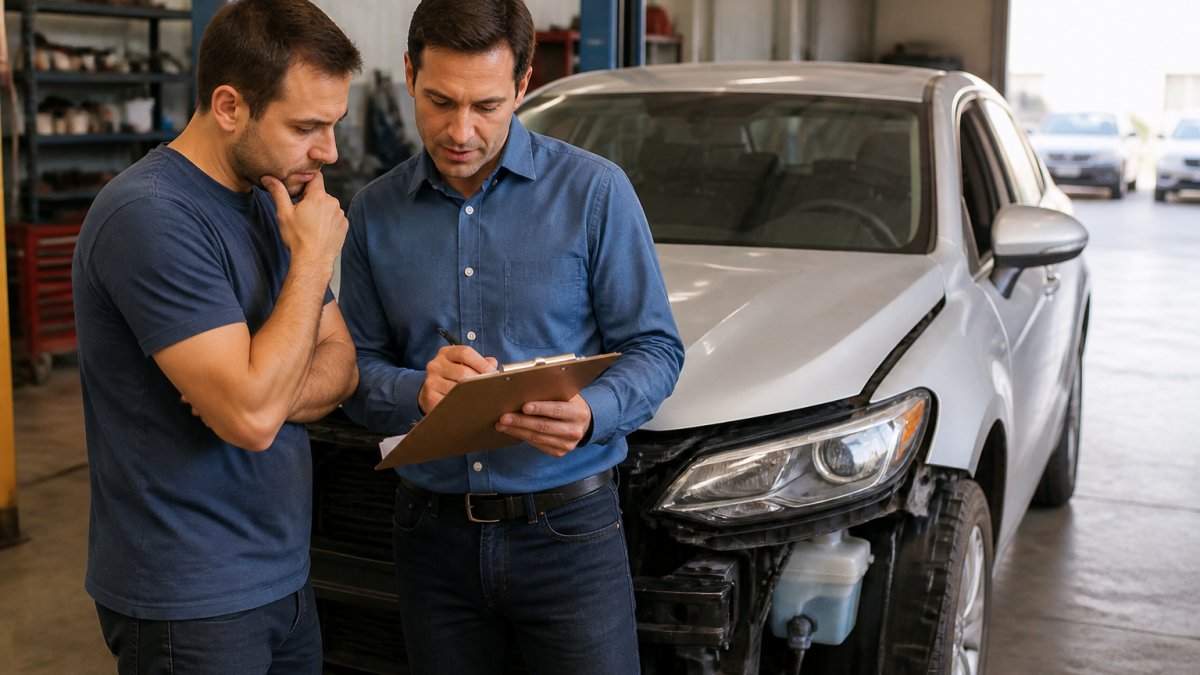
A short list of questions to ask an auto body shop reveals more than an hour of browsing. Ask these before you sign anything:
SCRSCollision
Who is certified to work on my model, and can I see the certificate?
Do you use original equipment parts, and who decides?
Will you put the repair authorization in writing before work starts?
How do you handle insurance negotiation if the insurer's estimate falls short?
For a deeper comparison checklist, see our guide on what to compare before choosing a collision shop. It walks through the criteria that matter most when two shops look equally qualified on paper.
Review Body Shop Repair Portfolio Examples for Evidence of Workmanship
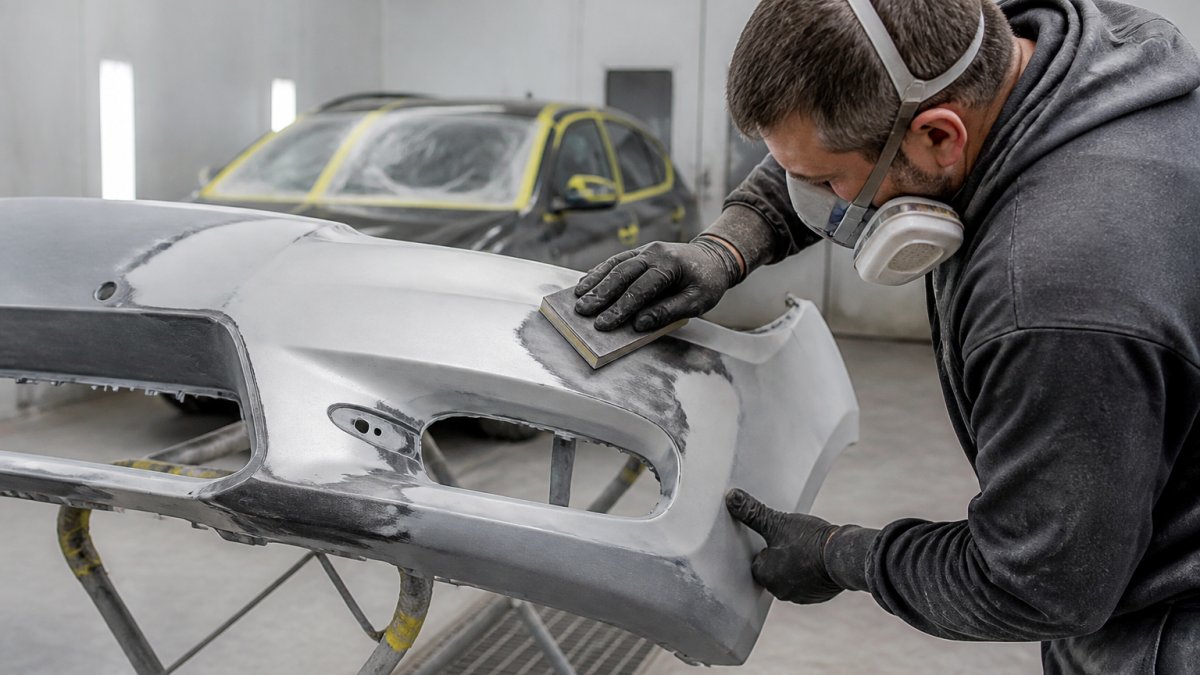
Body shop repair portfolio examples show you real workmanship before you commit. Ask for a repair portfolio covering your vehicle type, not a binder of generic fender benders. A luxury portfolio should show high-end and exotic work.

How to Evaluate Before-and-After Photos
Before-and-after photos are easy to stage and easy to fake. Check them properly:
Look for the same angle and lighting in both shots.
Zoom in on panel gaps and edges for consistency.
Check that paint reflection lines stay straight across panels.
Ask whether the photos are from this shop's own work.
A shop with nothing to hide will happily connect you with a past customer. The Federal Trade Commission advises consumers to ask for proof behind advertising claims, and that habit applies here.
Read Customer Reviews for Patterns, Not Just Star Ratings
Customer reviews matter most when you read them for patterns. One angry review can come from anyone.
Sort reviews by newest first. Check whether shop reputation has held up recently, not just years ago. Look at how the shop replies to criticism.
For luxury owners, search reviews for your brand name. A shop that handles high-end vehicles well will have customers saying so.
Demand a Written Auto Body Repair Estimate and Documentation
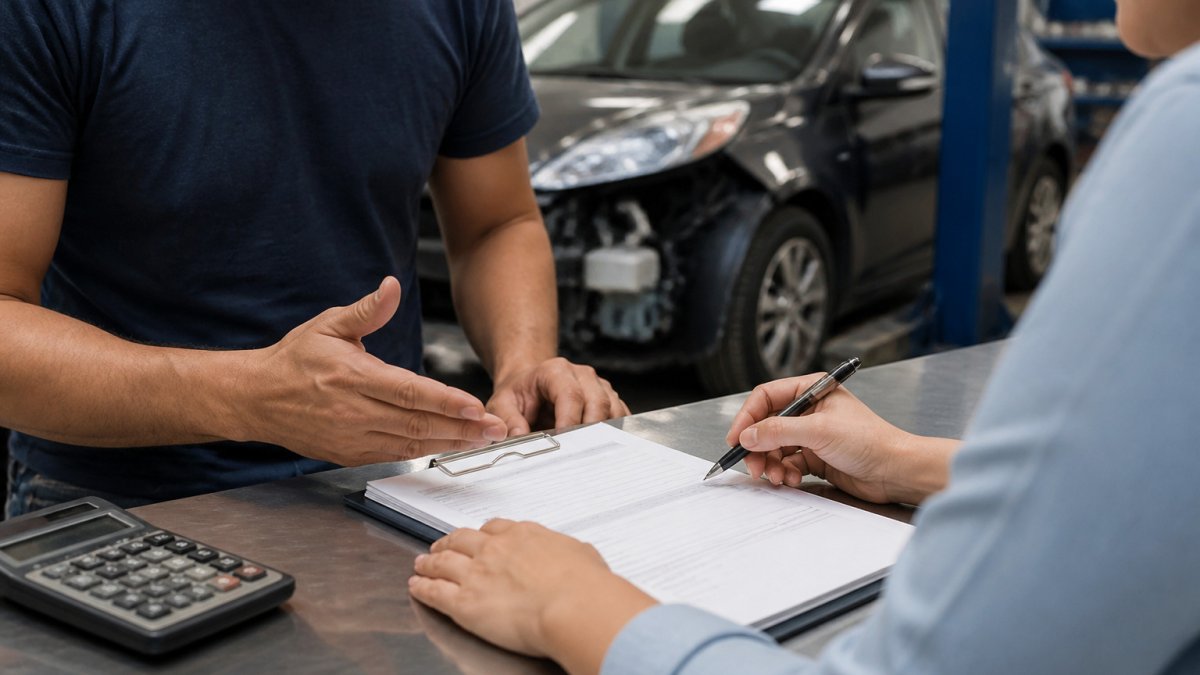
An auto body repair estimate and documentation package protects you twice: during the insurance claim and after the repair. Ask for a written estimate that lists parts, labor, and paint work line by line.
Good shops document the process. You should receive:
Photos of the damage before work begins
A written estimate and any revised estimates
Parts invoices showing what was actually installed
A final repair documentation packet with the warranty terms
Our guide to how a collision repair guarantee works explains what typical guarantees cover, what voids them, and which questions to ask before you sign off. Read it before you approve the final bill.
Schedule a Repair Consultation With a Shop That Shows Its Credentials
Verifying body shop expertise comes down to evidence. Certifications you can confirm. Equipment you can see. A portfolio you can inspect. Reviews that show a pattern. Documentation that protects you after you drive away.
If you are weighing luxury-specific needs, our guide to collision repair for luxury cars covers OEM standards and insurance claims in more detail. When you are ready to talk, contact our team to ask questions or set up an estimate. You can also review our collision, dent, and paint services to see what we handle.
E&A Supreme Auto Body works on domestic, foreign, luxury, and exotic vehicles. We also help with insurance claims and offer financing options for qualifying repairs.
Frequently Asked Questions
What certifications should a luxury car body shop have?
Look for manufacturer-specific collision repair certifications, which vary by brand and are typically listed on the automaker's own shop locator. I-CAR credentials and ASE technician certifications add supporting evidence. A manufacturer-certified collision repair shop has met equipment, training, and facility requirements set by the automaker, not just a trade association. Ask for the certification name, the issuing body, and the expiration date, then confirm it directly with the issuer.
How do you verify that a body shop is certified to repair your vehicle?
Ask the shop for its certification number and the name of the certifying organization. Then check the automaker's official shop locator or call the certification body to confirm the shop is listed and current. Certifications lapse if technicians miss required training, so a certificate on the wall does not guarantee active status. Cross-check the shop's name, address, and certification against the issuer's records before authorizing any repair work.
What should you look for in a body shop's repair portfolio?
Ask for body shop repair portfolio examples that match your vehicle's make and damage type. Look for before-and-after photos taken at consistent angles and lighting, close-ups of paint matching on adjacent panels, and documentation of structural or aluminum repairs. A credible portfolio includes the repair process, not just the finished result. Ask how long each job took and whether the shop performed ADAS calibration after the repair.
Does a luxury car need to be repaired at a manufacturer-certified body shop?
Most automakers recommend or require certified shops for warranty-sensitive structural and aluminum repairs, and some specify particular repair procedures and adhesives. A non-certified shop may still do quality cosmetic work, but it may lack the training, tooling, and documentation the manufacturer expects. Ask the shop to confirm it follows the automaker's published repair procedures and can provide the diagnostic scan and calibration records that support the repair.
Comments