
A Guide to Collision Repair Services for Luxury Cars

Last Updated: October 26, 2026
Quick Summary
Collision repair for luxury cars requires manufacturer-certified technicians, brand-specific equipment, and documented procedures because these vehicles are engineered around tolerances, materials, and electronic systems that punish shortcuts. The process runs from teardown and a written estimate through structural repair, ADAS calibration, multi-stage paint matching, and post-repair scans. You generally have the right to choose your repair facility, and the insurer's initial estimate is an opening position, not a final number.
Certifications are per-technician, not per-building, so ask who will actually work on your car.
Aluminum workstations must be kept separate from steel areas to prevent corrosion cross-contamination.
Some structural and safety-system components, such as crash sensors and seat belt pretensioners, are OEM-only.
Premium finishes often use three-stage paint systems, and a spray-out test card is matched under controlled light.
We do not quote prices over the phone because an accurate number requires a teardown.
Table of Contents
Why Collision Repair Services for Luxury Cars Demand a Different Standard
What Certified Collision Repair for Luxury Vehicles Actually Requires
Manufacturer Certifications and Technician Training
Specialized Equipment and Repair Infrastructure
Inside the Luxury Car Collision Repair Process
Damage Assessment and the Written Repair Estimate
Structural and Frame Repair, ADAS Calibration, and EV Safety
OEM Standards vs. Aftermarket, Recycled, and Reconditioned Parts
Where Manufacturer Procedures Restrict Parts Choice
How to Read an Estimate for Parts Specification
Parts Availability and Your Timeline
Luxury Car Paint Matching and Refinishing
Insurance Claims for Luxury Car Repairs: Your Rights and Options
Luxury Repair Costs, Timelines, and What Drives Both
What Drives Cost
What Drives Timeline
Why We Do Not Quote Over the Phone
How to Choose a Luxury Collision Repair Facility Step by Step
Frequently Asked Questions
Why Collision Repair Services for Luxury Cars Demand a Different Standard
Collision repair services for luxury cars follow a stricter set of rules than general bodywork, because a high-end vehicle is engineered around tolerances, materials, and electronic systems that punish shortcuts.
The difference shows up in the details. Aluminum body panels behave differently than steel. Advanced driver-assistance systems need recalibration after even minor structural work.
Most guides gloss over this. They list certifications and stop there. The real question is what those standards change about your repair, your timeline, and your bill.
What Certified Collision Repair for Luxury Vehicles Actually Requires
Certified collision repair for luxury vehicles is a documented capability, not a claim on a sign. It means the shop holds manufacturer-recognized credentials, employs trained technicians, and owns the equipment each brand specifies for its own vehicles.
Manufacturer Certifications and Technician Training
Manufacturer programs exist because each automaker publishes its own repair procedures, and generic training does not cover them. A technician certified through a brand program has been tested on that brand's structural repair methods, materials, and electronic systems.
What most guides miss is that certifications are per-technician, not per-building. Ask who will actually work on your car, not whether the shop is "certified" in the abstract.
Specialized Equipment and Repair Infrastructure
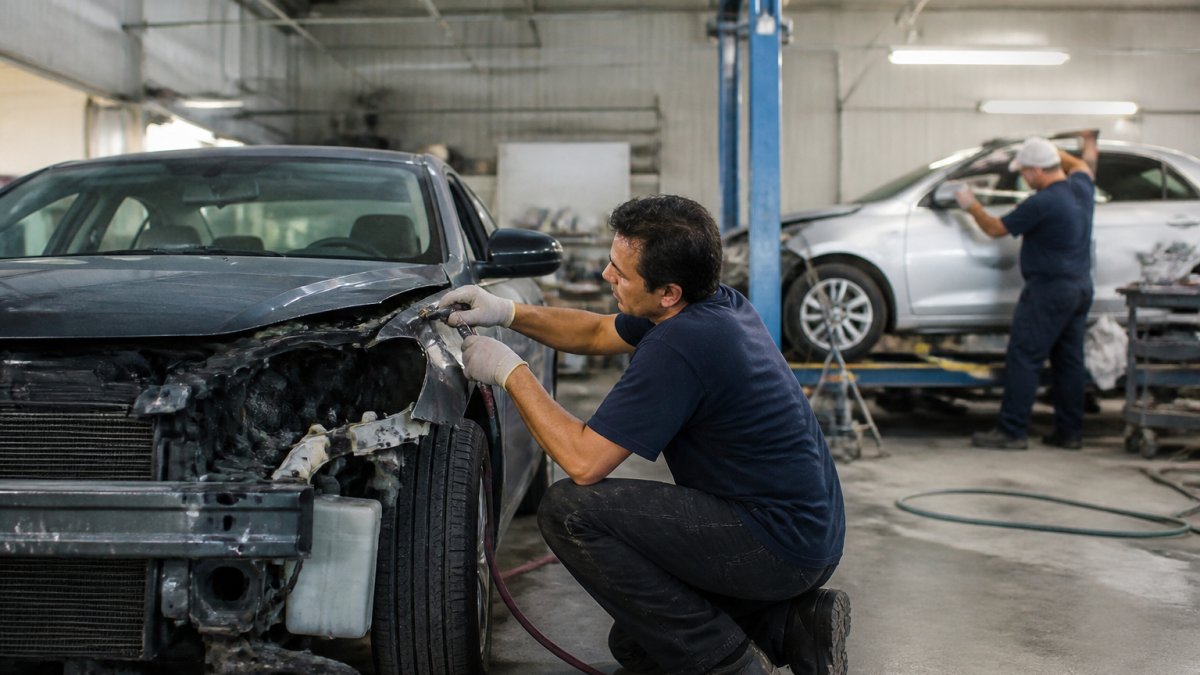
Luxury repair infrastructure includes aluminum-capable workstations kept separate from steel areas to prevent corrosion cross-contamination, frame straightening equipment rated for high-strength steels, and paint booths with filtered downdraft airflow. Electric vehicles add high-voltage safety protocols and isolated work zones.
A shop without this equipment can still accept your car. It just cannot follow the manufacturer's procedure. Watch out: a facility that outsources structural or aluminum work to a third party loses control of quality at the exact stage where it matters most.
Inside the Luxury Car Collision Repair Process
The luxury car collision repair process runs in a fixed sequence: assessment, written estimate, structural repair, mechanical and electronic work, paint, reassembly, calibration, and quality inspection. If you have just been in an accident and are unsure what to do first, our guide on what to do after an accident covers the immediate steps before repair begins.

Damage Assessment and the Written Repair Estimate
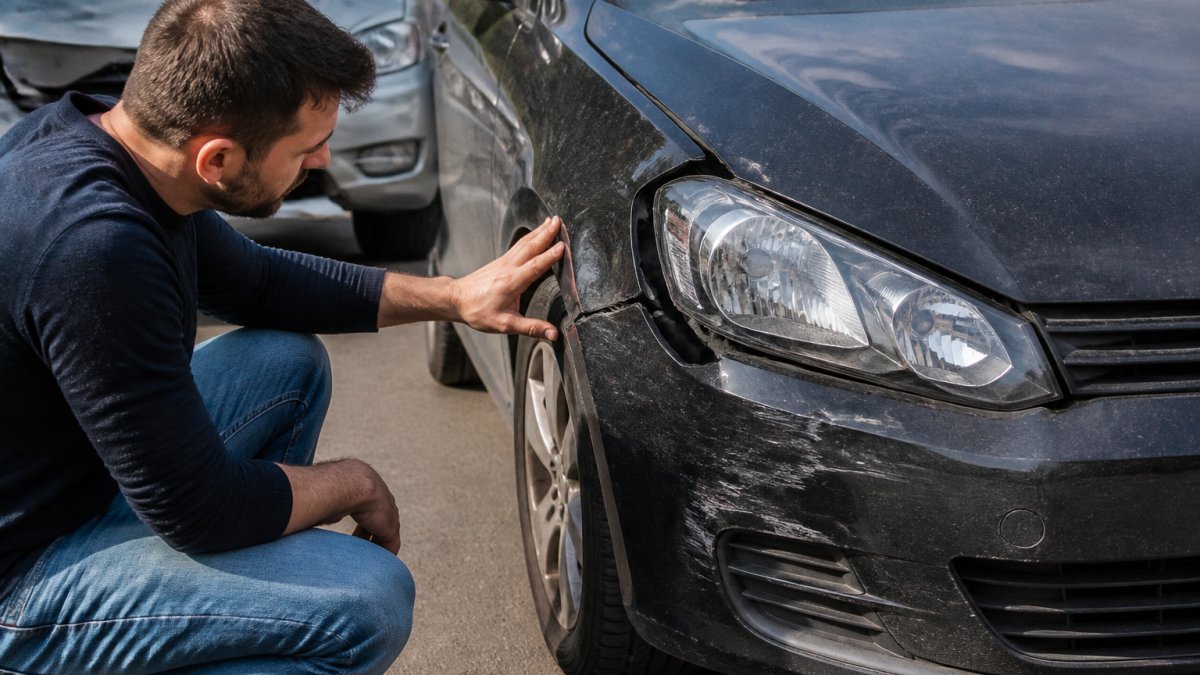
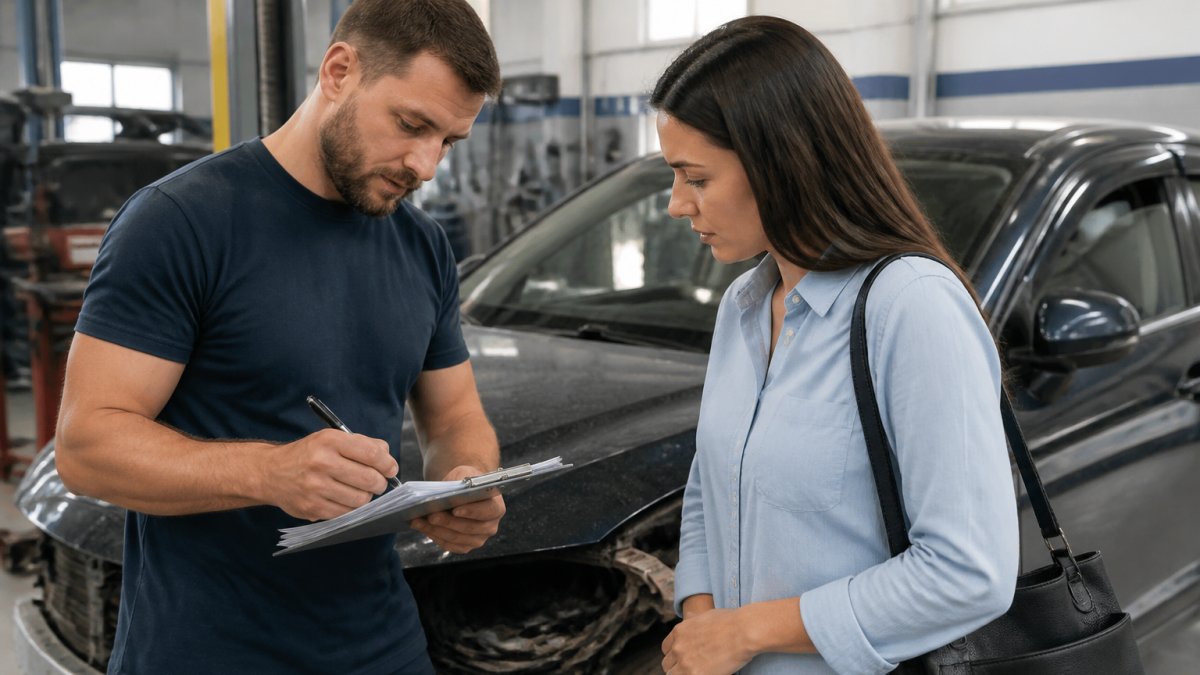
Assessment starts with a teardown, not a visual walk-around. Hidden damage behind bumper covers, in crumple zones, and under trim is common after a collision. The written estimate should list parts by name and number, labor hours by operation, and any procedures that depend on a calibration or scan.
A common mistake is accepting an estimate that lists "repair as necessary" line items. That language gives the shop open-ended authority and gives you no basis for comparison.
Structural and Frame Repair, ADAS Calibration, and EV Safety
Structural and frame repair restores the vehicle's crash-load paths to manufacturer specification, using measured pulling and documented tolerances. Advanced driver-assistance systems then need sensor calibration, because cameras and radar mounted to a repaired body sit at slightly different angles than before.
Post-repair validation closes the loop: a scan for stored codes, a road test, and a calibration verification. Ask for the documentation.
OEM Standards vs. Aftermarket, Recycled, and Reconditioned Parts
OEM parts are built to the manufacturer's specification for your vehicle; aftermarket, recycled, and reconditioned parts are not, and the difference affects fit, safety system performance, and resale value. That is the whole argument in one sentence. What most guides leave out is how to verify which type a repair plan actually specifies, and where manufacturer procedures limit your choices.
Part Type | Source | Typical Trade-off | What to Verify on the Estimate |
OEM new | Manufacturer | Exact fit and spec; highest cost | Line item shows an OEM part number and "new" |
OEM recycled | Salvage from same model | Genuine part; unknown prior history | Seller grade (A/B/C), mileage, and VIN donor if available |
Aftermarket | Third-party manufacturer | Lower cost; variable fit and finish | CAPA certification or brand name, not "quality replacement" |
Reconditioned | Refurbished original | Middle ground; quality depends on the rebuilder | Who reconditioned it and what warranty applies |
Where Manufacturer Procedures Restrict Parts Choice
Automaker repair procedures often specify which part types are acceptable for a given operation, and some structural and safety-system components are OEM-only. Common examples include bumper energy absorbers, crash sensors, seat belt pretensioners, and certain high-strength steel sections. The procedure may also require replacement rather than repair when a panel's material or thickness falls outside repairable limits. Ask your shop to show you the manufacturer procedure page that addresses parts choice for your specific repair.
How to Read an Estimate for Parts Specification
An estimate that lists "used" or "aftermarket" without a brand, grade, or part number is not specific enough to compare. Look for:
A named part type and part number for every line
Labor operations tied to the part being replaced, not a lump sum
A separate line for any calibration or scan required after the part is installed
If the shop proposes a non-OEM part, ask three questions: Is it permitted by the manufacturer procedure for this repair? Does it carry a written warranty? And how does it affect the vehicle's safety systems and resale disclosure? A legitimate shop will answer all three in writing.
Watch Out A low estimate built on aftermarket structural or safety-system parts can cost more later in fit issues, calibration failures, and diminished resale value. The cheapest line item is not the cheapest repair.
Parts Availability and Your Timeline
OEM parts for low-volume luxury and exotic models can be backordered for weeks, and some components are built to order. A shop that checks availability before you authorize work gives you a realistic timeline; one that orders after teardown and then discovers a backorder has already committed your car to the bay. Ask whether the estimate includes a parts availability check and who monitors backorders.
Luxury Car Paint Matching and Refinishing
Luxury car paint matching is the process of reproducing your vehicle's exact color, including its variant, metallic orientation, and clear coat system, so the repaired panel is indistinguishable from the originals.
Refinishing starts with a spray-out test card matched against your car under controlled light, not a color code alone.
What most owners do not know: paint formulations vary by production batch, so the same code on two cars can differ slightly. A shop that skips the spray-out is guessing.
Insurance Claims for Luxury Car Repairs: Your Rights and Options
Insurance claims for luxury car repairs give you more control than most drivers realize.
If your insurer's estimate looks low, a shop can submit a supplement documenting hidden damage found during teardown. That is a normal part of the process, not a confrontation.
A common frustration is being told to use a "preferred" shop. You can decline. Coordination between your shop and the insurer is something a good facility handles for you, including sending photos and parts documentation.
Luxury Repair Costs, Timelines, and What Drives Both
Luxury repair costs and timelines depend on four variables: the extent of structural damage, the parts type and availability, the paint system involved, and whether calibration or EV procedures are required. Our breakdown of auto body repair cost estimates explains what to expect from an estimate and how line items are built. What follows is how those variables actually move the number and the calendar.
What Drives Cost
Structural vs. cosmetic damage. A bumper cover replacement and refinish is a different job from a repair that requires frame measurement, pulling, and replacement of a high-strength steel section. Structural work adds labor hours, measurement time, and often calibration.
Parts type and count. OEM new parts carry the highest part cost; recycled and aftermarket parts lower it but introduce fit and verification work. A single repair can involve dozens of line items, and each non-OEM choice is a trade-off you should see in writing.
Paint system complexity. Three-stage and multi-stage finishes require more material, more spray-out time, and more blend panels than a single-stage color. Premium finishes also demand controlled booth conditions.
What Drives Timeline
A straightforward panel replacement and refinish moves faster than a repair involving frame measurement and ADAS recalibration. Common patterns that stretch a timeline include:
OEM parts on backorder, especially for low-volume models
Scheduling aluminum or structural work in a bay rated for it
Calibration equipment and technician availability
A shop that gives you a single date without explaining these variables is guessing. A realistic timeline names the dependencies and tells you which ones are on the critical path.
Why We Do Not Quote Over the Phone
We do not quote prices over the phone for collision work, because an accurate number requires a teardown. Hidden damage behind bumper covers and under trim changes both the parts list and the labor hours. What we will do is give you a written estimate and explain every line, so you can compare it against any other estimate on equal terms.
Key Takeaway Ask for three things before you authorize work: a written estimate with named parts and itemized labor, a timeline that names its dependencies, and a clear explanation of what could trigger a supplement. Those three answers tell you more than any advertised price.
How to Choose a Luxury Collision Repair Facility Step by Step
Choosing a facility comes down to verification, not impressions. Work through this checklist before you hand over the keys:
Confirm the shop holds manufacturer certifications for your specific brand
Ask which technicians will work on your car and what training they hold
Request a written estimate with named parts and itemized labor
Before you commit, read our explanation of what a collision repair guarantee covers, including what voids it. Then, when you are ready to move forward, you can find our shop and get directions or contact us with questions or to request an estimate.
Best for: owners who want documentation at every stage. Skip if: you are looking for the lowest bid with no questions asked.
A luxury vehicle deserves a repair that follows the manufacturer's procedure, not the fastest path to a signature.
Frequently Asked Questions
What should I look for in a luxury car collision repair shop?
Look for manufacturer certifications and technician training, since these confirm the shop follows OEM standards for your make. Ask whether the facility has the specialized equipment for structural and frame repair, ADAS calibration, and high-voltage safety on electric models. Request a written repair estimate, confirm what parts will be used, and ask about the written warranty. Reading customer reviews helps too, but the certification and equipment questions tell you more about whether the shop can actually handle your vehicle.
How does collision repair differ for luxury cars compared to standard vehicles?
Luxury and exotic vehicles use aluminum and high-strength steel structures, multi-stage paint systems, and dense sensor packages that demand manufacturer procedures rather than generic repair methods. A certified collision repair for luxury vehicles typically involves OEM parts sourcing, precise paint matching, and post-repair validation of advanced driver-assistance systems. Skipping any of these steps can affect resale value and safety, which is why the repair estimate and process usually look different from a standard sedan repair.
Will insurance cover repairs at a luxury auto body shop?
Insurance claims for luxury car repairs generally cover the reasonable cost of restoring your vehicle, and you typically have the right to choose the shop. If the insurer's initial estimate is lower than the actual damage, a shop can document the difference and request a supplement. Ask the shop to walk you through repair authorization and insurer coordination before work begins, and keep every document. Coverage details depend on your policy, so confirm specifics with your insurer.
How long does luxury car collision repair take?
Timelines depend on the extent of damage, parts availability, and whether structural or frame repair is needed. OEM parts sourcing for luxury and exotic models can add lead time, and paint refinishing with proper curing adds days. ADAS calibration and post-repair validation also take time. A shop should give you a written estimate with a realistic schedule after damage assessment, and update you if a supplement changes the plan.
Can a luxury car be repaired after frame damage?
Yes, in many cases. Structural and frame repair on luxury vehicles is possible when the shop has the right equipment and follows manufacturer procedures. The key is an accurate damage assessment first, because frame damage can affect alignment, sensor calibration, and crash performance. Ask whether the facility performs structural repair in-house and how it validates the work afterward. If the damage exceeds the manufacturer's repair limits, the shop should tell you plainly.
What should I check before accepting my car after collision repairs?
Inspect the paint match in daylight from several angles, check panel gaps and trim alignment, and confirm all sensors and driver-assistance features work. Ask for the quality inspection and post-repair validation records, and confirm the written warranty terms in writing. Test the doors, trunk, and hood, and look for overspray. If you find damage later that the repair missed, contact the shop immediately and reference your warranty.
Schedule service
Add easupremeauto.com as a preferred source on Google →
Comments